
Summary and Conclusions of our first Campaign Phase. From Global Solidarity to Political Accountability
Next week, we will launch the second phase of our joint campaign with the release of the second video, followed by a joint discussion focusing on political accountability. Alongside the video launch, we have published weekly blog posts featuring interviews, video statements and contributions from community members and activists. It has been an intense and immensely fruitful exercise, and we would like to thank everyone who contributed. Let’s face it: we could not have achieved this without the support and engagement of so many people. Thank you for making this campaign possible. We would like to take this opportunity to briefly reflect on what we have achieved so far and to remind ourselves of the powerful messages and voices that have shaped the campaign.
“You Said You Would Do This. Did You Do It?”
Making a pledge takes seconds. Turning that promise into something people can rely on takes much more. Between a government announcing a contribution and a person receiving HIV treatment, getting a TB diagnosis, or being protected from malaria, a lot must happen. Money must arrive. Programmes must be funded. Medicines and services must reach people. Community organisations need the resources and security to keep their work going.
None of this happens automatically.
This is where TOGETHER WE SAVE LIVES began: We wanted to take the technical language of “pledge conversion” and bring it down to earth. What does a financial commitment actually become? How does a government promise become treatment, prevention and services and ultimately something that changes or even saves a person’s life?
To explore that journey, we listened to activists, community leaders and advocates from different countries. Their voices took us beyond pledges and financing to questions of trust, access, inequality, community power and, ultimately, people’s lives. Because a pledge is only the beginning. What matters is what happening next.
It started with solidarity
We began that conversation at AIDS 2026 in Rio de Janeiro, where we previewed our first campaign video and asked a simple question: What does global solidarity mean to you?
There was no single answer.
For Andriy Klepikov of Alliance for Public Health, it starts with something very human: “Global solidarity is mutual support, experience, happiness and love.”
Courtney Howe of STOPAIDS challenged the idea that countries have to choose between domestic needs and international commitments: “This false narrative that it’s either domestic or it’s global, that we can’t do both.”
And Gracia Violeta Ross of the World Council of Churches connected solidarity directly to responsibility: “It’s loving your neighbor as yourself. But it’s also a commitment and obligation.”
These voices became the starting point for our first blog, A Promise Alone Is Not Enough.
A pledge can make headlines. But it only starts to matter when it becomes action: Investment matters. But what matters most is whether it reaches the people who need it.
The next step took us from the size of an investment to the question of access. In Inequality: The Missing Link Between Investment and Impact, we looked at why funding alone does not guarantee access.
Poverty, stigma, discrimination, criminalisation and exclusion can still determine who gets information, who feels safe seeking care, and who can actually access services.
This is where community-led organisations are indispensable. They know the gaps. They know who is being left behind. And they are often the ones reaching people whom formal systems simply do not reach. Global solidarity means little if the people most affected cannot share in the progress it is meant to create. Reliable funding means knowing there will be a tomorrow.
Our conversation with Gracia Violeta Ross brought the question even closer to everyday life.
For someone who depends on HIV treatment, reliable financing can determine whether medication and diagnostics remain available and whether a trusted community organisation is still there when it is needed. As Gracia put it: “Reliable funding means something very basic: the freedom from constantly worrying about tomorrow.”
Predictability matters. People, clinics and community organisations need to know that treatment and services will still be there tomorrow, not just today. And communities are not simply on the receiving end of these decisions. They belong at the table where priorities are set and resources are allocated. When governments make promises, civil society has a job: to remember them, and to hold them to account. So let’s not let promises to disappear into spreadsheets and headlines. Let’s track them, question them and demand action. As Gracia asked: “You said you would do this. Did you do it?”
Solidarity is shared responsibility, not charity
Another voice in the campaign, Nonzaliseko Magidiwana Ajaelu, connected reliable funding directly to the meaning of solidarity itself. Her words shifted the perspective away from one country “helping” another: “Solidarity means treating that pipeline as everyone’s responsibility, not charity from the lucky to the unlucky.”
HIV treatment cannot stop and start according to political cycles. People may be separated by thousands of kilometers, but the systems that enable access to treatment and prevention are interconnected. Predictable funding is therefore about more than a stable budget line. It means treatment can continue, communities can plan and services remain available when people need them. Solidarity is not an occasional act of generosity. It is shared responsibility, including for people we may never meet.
What happens when that reliability disappears?
The next contribution confronted this question from the opposite direction. In Lessons from the PEPFAR Pulse Study, Masen Davis and Jennifer Sherwood looked at what happened when a system that organisations and communities had relied on was suddenly disrupted.
The PEPFAR Pulse Study surveyed 166 implementing partners across 46 countries. Seventy-seven percent reported an award termination or payment delay. More than 1,700 service delivery sites closed and more than 16,000 staff were lost. And while some organisations found new sources of support, 96 percent said those resources were insufficient to replace their PEPFAR losses.
Their central message was simple: “Progress is not the same as permanence.”
Funding disruption does not only mean losing money. Staff, services, knowledge and trusted relationships can disappear with it, structures that may have taken years or decades to build.
Remember how we did it
The following blog, “Global Solidarity: Remember How We Did It,” took a step back. Alexei Lakhov placed today’s funding cuts in the longer history of the global HIV response, and reminded us that the progress of the past decades did not happen by itself. It was fought for, built through political choices, sustained by long-term investment, and strengthened by communities. As Alexei writes:
“It happened not because the world was united but because enough people decided that others dying of a treatable disease was not acceptable, and then paid for it, year after year.” Today, as funding declines and structures built over decades come under pressure, that history carries a simple message: “The least we can do is not undo it.”
So, what did we hear?
We started with a simple question: What does global solidarity actually mean?
Over the past weeks, the answers have become clearer, and more concrete:
Global solidarity means recognising that health does not stop at borders. It means making commitments and delivering on them. It means looking beyond how much is invested to who benefits. It means recognising communities as part of the response, not simply as its beneficiaries. It means predictability, giving people, organisations and programmes the security to plan beyond the next funding decision. It also means protecting what we have built, because progress can be lost when the structures that sustain it are allowed to disappear. And, ultimately, it means accountability: making commitments visible, tracking what happens to them, and asking who is and who is not, seeing the promised results.
Global solidarity is not just about promises. It is about turning commitments into action, making sure that action reaches people and being accountable for what happens next. This is what sits behind the technical language of pledge conversion. Between a pledge and its impact are people, institutions and a long chain of decisions. And that leads us directly to the next phase of our campaign.
A promise has been made. What happens next?
Our first phase asked what global solidarity means and what promises can make possible. But once a government has publicly made a commitment, another question follows:
Who makes sure that promise is kept?
But accountability means asking harder questions: What happens between a funding announcement and the money reaching the people and programmes it was promised to? Who is asking why commitments are delayed, reduced or redirected and who is answering? Who is accountable when short-term political priorities put decades of progress at risk? And what power do communities and civil society have to hold decisionmakers to their commitments?
These questions take TOGETHER WE SAVE LIVES into its second phase: political accountability. We will start that next conversation in Berlin. Alongside the World Health Summit, we will launch our second campaign video and bring together community advocates, political decisionmakers and Global Fund leadership at our event:
From Promises to Delivery: Who Is Accountable for Global Health Financing?
13 October 2026 | 14:00–15:30
Hotel Palace Berlin, Budapester Str. 45
Together, we will explore what accountability looks like in practice: what people can count on once a contribution is announced, who keeps track of commitments, who answers when promises are not delivered, and what it takes to turn a public pledge into action.
It is the next step in the journey we began with pledge conversion: from asking what a promise can make possible to asking who is responsible for making sure it happens.
Because a pledge may be announced in a few seconds.
What matters is what happens afterwards.
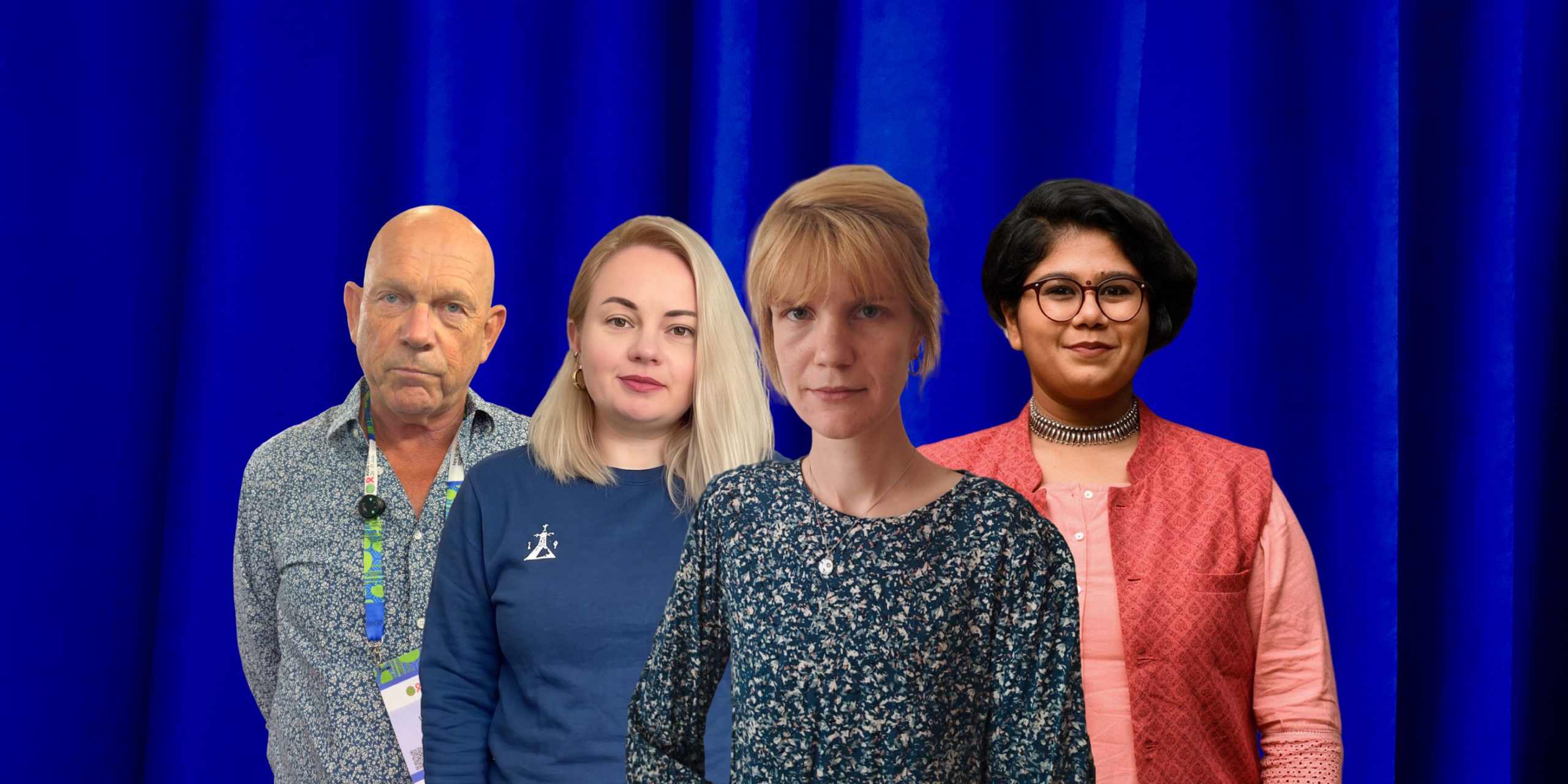
By Johanna Fipp, Inna Gavrylova, Priyanka Ayer and Peter Wiessner
TOGETHER WE SAVE LIVES – THE GLOBAL FUND: FROM FINANCIAL CONTRIBUTIONS TO IMPACT is a joint campaign by the Global Fund Advocates Network (GFAN), Alliance for Public Health (APH) and Action against AIDS Germany.