Promises Encourage. But Only Delivery Saves Lives!
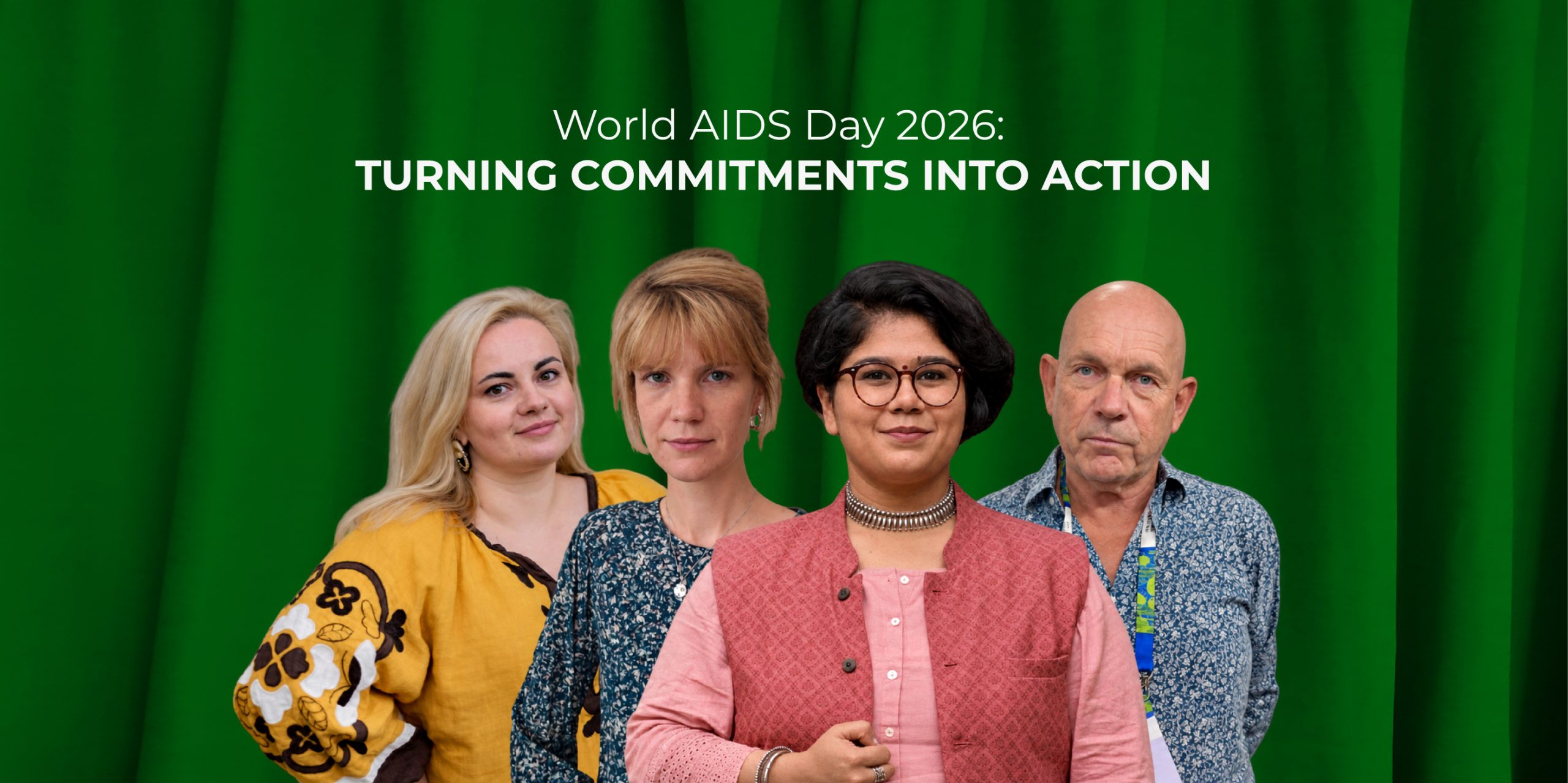
World AIDS Day 2026: Turning Commitments into Action
World AIDS Day 2026 comes at a critical moment for the global HIV response. With adopting the Political Declaration on HIV/AIDS “United to End AIDS by 2030” by the United Nations in June 2026, Governments have renewed their commitments to ending AIDS, yet funding cuts, political uncertainty and growing pressure on community-led services threaten decades of progress.
With our campaign TOGETHER WE SAVE LIVES we have explored three interconnected questions: What does global solidarity mean in practice and how can we make sure that promises are kept? How do we hold political leaders accountable? And what is needed to keep lifesaving structures and programmes stable amid political and financial uncertainty?
As World AIDS Day approaches, we want to bring these messages together and amplify our shared call for action.
Join us: A shared call to action for World AIDS Day
To mark World AIDS Day 2026, we, the Global Fund Advocates Network (GFAN), Alliance for Public Health (APH) and Action against AIDS Germany have prepared a Social Media Advocacy Toolkit as part of our campaign.
We will share our toolkit with partners and networks on 25 November 2026, launching a coordinated social media campaign from 26 November to Human Rights Day on 10 December.
With the toolkit we bring together all three campaign videos, ready-to-share messages and adaptable visuals. We will highlight the commitments made in the 2026 UN Political Declaration on HIV/AIDS and call for action to protect progress achieved through the Global Fund partnership and UNAIDS to ensure predictable financing and sustain evidence and human right-based programs and community-led prevention, treatment and care.
A central moment of this social media campaign is World AIDS Day, 1 December. This year’s theme: “Ending AIDS starts with Access” is aligned with our campaign. On World AIDS Day we will launch our third and final campaign video. We ask you, our partners and friends, to watch and share our video to show solidarity and remind one and all why and how lifesaving programmes depend on not just reliable funding but also political responsibility and sustained support for the organisations, like the Global Fund,delivering essential services. Access is one of the preconditions to end AIDS by 2030.
We invite partners, civil society organisations and advocates to share the materials, adapt the messages and join our call for political accountability.
Because the more voices demand accountability, the harder it becomes for donors, delivered pledges and promises to be neglected or “forgotten”. Let’s not stay silent! Promises must be delivered in full and on time! All the pledges made to the Global Fund as a part of the 8th Replenishment must be delivered in full and on time!
Protect what we have achieved together!
The global HIV response demonstrates what sustained international cooperation can achieve. Since 2002, the Global Fund partnership has helped save 72 million lives, through investments in prevention, treatment, healthcare systems and community-led responses.
But progress is not permanent.
Funding cuts, pressure on multilateral institutions and shifting political priorities put these achievements at risk. Delayed or reduced support disrupts treatment and prevention programmes and leaves community organisations struggling to maintain essential services.
As Alexei Lakhov highlighted in his Together We Save Lives campaign contribution, the global HIV response was built through political decisions, international cooperation and persistent community advocacy. UNAIDS and the Global Fund have played complementary roles in this progress. Global solidarity therefore means more than announcing financial contributions. It means protecting the partnerships, institutions and services built over decades and ensuring they continue to reach those most in need.
We Must go from declarations to delivery!
In June 2026, UN Member States adopted the new Political Declaration on HIV/AIDS, renewing their commitment to a coordinated and evidence-based people-centred approach.
The adoption of the declaration strengthened the role of UNAIDS and reaffirmed the United Nations’ commitment to maintaining and continuing the Joint Programme. It emphasises country leadership, sustainable financing, human rights and meaningful community participation. It also recognises the importance of domestic and international funding, including through the Global Fund, to sustain progress beyond 2030.
But commitments must be actualized, brought to reality!
Will governments provide the resources needed to translate them into national programmes? Will they protect the rights of people living with and affected by HIV? Will communities have a meaningful role in decisions affecting access to services? And will donor governments deliver their Global Fund contributions in full and on time?
Again, these were the questions we have been asking in our campaign TOGETHER WE SAVE LIVES.
Political accountability means taking responsibility for the consequences of decisions. The People’s Declaration on HIV and AIDS, endorsed by more than 500 international civil society organizations at the conclusion of the 2026 UN High-Level Meeting on HIV/AIDS responds to shortcomings in the official UN Political Declaration and articulates more clearly the priorities and demands of communities and civil society, particularly for people whose access to healthcare depends on sustained funding to multilateral institutions like the Global Fund..
Let’s reiterate the motto of this year’s World AIDS Day: “Ending AIDS starts with Access”, to secure access is a political choice and for us, people living with and affected by HIV and their respective communities, one of the key markers to measure political accountability.
What keeps lifesaving programmes running?
With our third campaign video, that we will launch on World AIDS Day, we want to center a question that connects global solidarity and political accountability to everyday lives: What does it take to keep lifesaving programmes running?
For someone living with HIV, stability means knowing treatment will remain available. For healthcare workers, it means having the medicines and resources to provide continuous care. For community organisations, it means retaining staff, building trust and reaching people facing stigma and discrimination. For countries, it means predictable resources and the capacity to sustain services over time.
This requires more than short-term commitments. Funding must arrive when needed, programmes must be able to plan beyond individual funding cycles, and community-led organisations must be recognised and supported as essential partners. This is especially relevant as countries face pressure to assume greater financial responsibility for their health programmes. As the Action Against AIDS Germany Fireside Chat on transition and transition preparedness highlighted, the end of international financing is not the same as a successful transition.
The real measure of success is not whether international support can be withdrawn, but whether people continue receiving the services they need.
Communities are essential to lasting progress
One message runs through all three phases of our campaign: communities are not simply beneficiaries of global health investments; they are essential to their success.
Community-led organisations are the backbone of the HIV-response, they connect people to prevention, treatment and care, reach populations often excluded from mainstream healthcare, challenge discrimination and hold institutions accountable. Yet they are frequently among the first to suffer from funding cuts.Protecting community-led responses is therefore a prerequisite for sustainable health financing and lasting results.
The commitments made by the United Nations in the 2026 Political Declaration to End AIDS by 2030 must translate into meaningful participation, adequate resources and continued protection of human rights. Without these conditions, even well-funded programmes risk leaving people behind.
From World AIDS Day to Human Rights Day: Turning promises into action
World AIDS Day is an opportunity to reflect on the achievements of the global HIV response. Human Rights Day reminds us that access to health, dignity and care must be protected for everyone, without discrimination.
Between these two dates, TOGETHER WE SAVE LIVES will continue to highlight the responsibilities that follow from political commitments.
We call on governments and international partners to deliver their Global Fund commitments in full and on time, protect HIV prevention and treatment, ensure sustainable financing for community-led services and uphold everyone’s right to health, to strengthen the United Nations Joint HIV Program and to safeguard the transition process UNAIDS is currently undergoing.
The commitments made in 2026 must become the foundation for continued progress, not another set of promises left unfulfilled.
Promises matter. But delivery saves lives.
TOGETHER WE SAVE LIVES I THE GLOBAL FUND: FROM FINANCIAL CONTRIBUTIONS TO IMPACT is a joint campaign by the Global Fund Advocates Network (GFAN), Alliance for Public Health (APH) and Action against AIDS Germany (AgA).
Campaign Websites
Together We Save Lives – Alliance for Public Health
Together We Save Lives – Action against AIDS Germany
Key documents & references
UN Political Declaration on HIV and AIDS (2026): United to End AIDS by 2030
World AIDS Day 2026: Official UNAIDS Theme & Campaign
The People’s Declaration on HIV and AIDS (2026): Read the Declaration (PDF)
Inna, Johanna, Priyanka, Peter