Promises don‘t save lives. Delivery does.
“You Cannot Be Tired of Being Accountable”
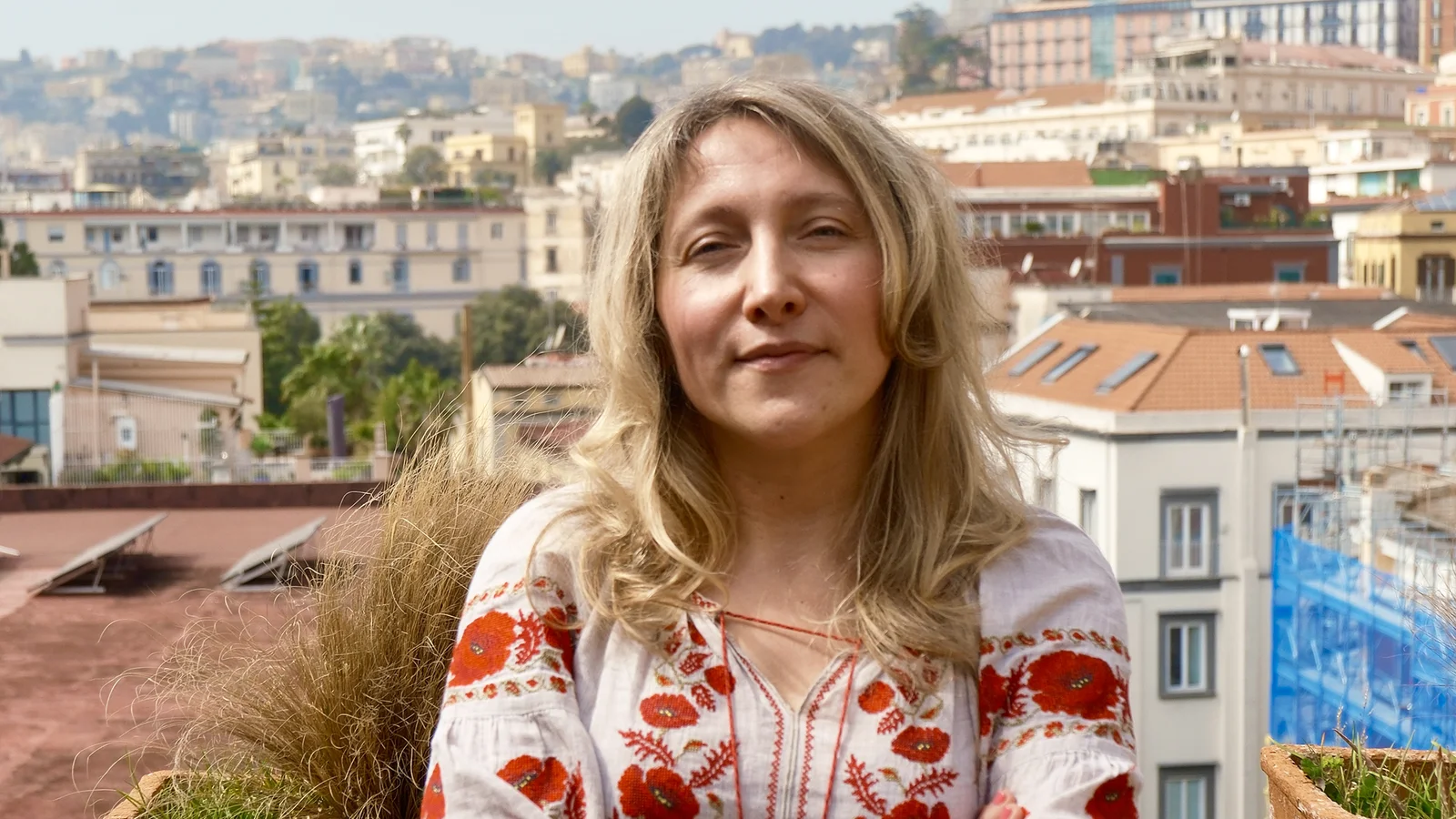
Valeriia Rachynska of 100% LIFE on political leadership and accountability, living and working through war in Ukraine, and why communities need more support, not less Based on an interview with Valeriia Rachynska by Johanna Fipp and Peter Wiessner, Action against AIDS Germany.
What does political accountability mean when political decisions determine whether treatment continues, clinics remain open and communities can rely on support?
For Valeriia Rachynska, Director of Human Rights, Gender and Community Development at 100% LIFE in Ukraine, the answer is deeply personal.
“I’m not only Director on Human Rights,” she says. “I’m a woman living with HIV. I’m a mother of two kids. And I was displaced twice.”
She knows from experience what it means when people can rely on support and what happens when they cannot.
“It’s actions”
100% LIFE was founded by people living with HIV and today has more than 3,000 social workers and 24 regional branches across Ukraine. Its work spans HIV treatment and prevention, human rights, and the fight against stigma and discrimination.
Its slogan is simple: Fight for Life. When we ask Valeriia how she defines political accountability, she does not start with politics.
“I don’t want to provide a definition. Because it’s actions. It’s access to treatment. It’s money that’s invested in the right things, for the right people, in the right places. And finally, it’s lives that were saved with this money and with those commitments.”
For her, communities are not simply beneficiaries of political decisions. They are part of the accountability process itself.
“We do not live separately from society. We are part of society. We are decision-makers, we are taxpayers, and we are people who should participate in the decision-making process as well.”
That is also why civil society cannot simply be treated as a recipient of political decisions.
“We’re keeping our governments accountable,” she says. “We are watchdogs.”
And accountability, she adds, is “shared responsibility.”
When accountability becomes action
For Valeriia, the Global Fund’s response after Russia launched its full-scale invasion of Ukraine is a concrete example of what political leadership can look like.
“When the full-scale invasion started, for the Global Fund it took less than two weeks to make a full reprogramming of everything according to the emergency context,” she says.
The Fund provided emergency support, increased flexibility and continued to work with community-led organisations alongside government structures.
“We received full understanding of our problems, emergency response, emergency support, joint advocacy.”
For Valeriia, this was “one of the best examples of political leadership.” The point was not simply to maintain existing commitments, but to adapt them to a radically changed reality – so that treatment, prevention and community services could continue despite the war.
“We created this clinic with love”
That reality has not gone away. During heavy Russian attacks on Kyiv in 2026, the 100% LIFE community-led clinic was damaged by a blast wave. Windows, medical equipment, walls and the entrance were affected. When Valeriia talks about it, she becomes emotional.
“We created this clinic with love for our communities.”
The clinic was built as a safe place for people experiencing stigma and discrimination to access doctors, social workers, diagnostics, and sexual and reproductive health services. Partners responded to the damage with offers of support, and Valeriia is grateful for that solidarity. But after years of war, she sees another challenge.
“People got used to our war.”
At the beginning of the full-scale invasion, she remembers enormous understanding, support and compassion. Today, the attacks continue, but the attention of the outside world has shifted. Expectations may have returned to normal. Life in Ukraine has not.
“We are quite tired, and right now we need more support, not less.”
“You cannot be tired of being accountable”
For Valeriia, this is where the experience of Ukraine connects directly to the broader question of political leadership. Political attention moves. Headlines change. New crises emerge. But the needs of people living through those crises do not simply disappear.
“You cannot be tired of being a leader. You cannot be tired of being accountable.”
She applies the same principle to the global HIV response.
“You cannot say, ‘I will be a global leader tomorrow.’ You cannot say, ‘I’m going to support the global HIV response tomorrow.’”
Because communities cannot put their lives on hold while political priorities shift.
“The epidemic and war and winter they will not wait until you are ready.”
For Valeriia, political accountability is therefore not only about making commitments. It is about staying with them when circumstances become difficult — listening to communities, adapting support to reality, and making sure that promises become something people can actually rely on.
Her message to political leaders is simple:
“We are here and waiting for you to show real leadership and accountability.”
Promises matter. But delivery saves lives.
This blog is part of the second phase of TOGETHER WE SAVE LIVES – THE GLOBAL FUND: FROM FINANCIAL CONTRIBUTIONS TO IMPACT, focusing on political leadership and political accountability. The campaign is a joint initiative of the Global Fund Advocates Network (GFAN), Alliance for Public Health (APH) and Action against AIDS Germany.