
Inequality: The Missing Link Between Investment and Impact
This blog is part of TOGETHER WE SAVE LIVES – THE GLOBAL FUND: FROM FINANCIAL CONTRIBUTIONS TO IMPACT, a joint campaign by the Global Fund Advocates Network (GFAN), Alliance for Public Health (APH) and Action against AIDS Germany.
The first video of Together We Save Lives starts with a simple message: when governments support the Global Fund, they invest in more than programs. They invest in people. They save lives.
Since 2002, more than US$65 billion has been disbursed through the Global Fund to fight HIV, tuberculosis and malaria and strengthen health and community systems. These investments have delivered treatment, prevention, diagnosis and care to millions.
But investment alone does not guarantee impact. Whether medicines, services and new technologies actually reach people also depends on something too often overlooked: inequality.
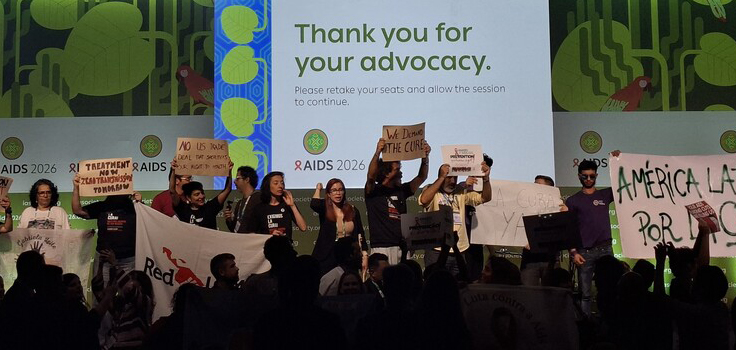
At the International-AIDS-Conference 2026 in Rio de Janeiro, a discussion on the report of the Global Council on Inequality, AIDS and Pandemics, chaired by Nobel laureate Joseph E. Stiglitz, put this question at the centre: Can investments in global health achieve their full impact if we fail to address the inequalities that determine who can actually benefit from them?
Inequality is a health risk
Inequality is often treated as an economic or social problem. But it is also a health problem. Poverty, discrimination and exclusion shape access to healthcare, education, nutrition, housing and social protection. They influence who can access prevention, testing and treatment and who is most likely to be left behind.
At #AIDS2026, Stiglitz illustrated the scale of these inequalities, drawing on the World Inequality Report 2026 and Oxfam data: the richest one percent of the world’s population owns around 44 percent of global wealth, while the poorer half controls only a tiny fraction.
These disparities have direct consequences for health. They can make it harder to protect yourself from infection, reach healthcare or stay on treatment. At the same time, illness can deepen inequality through lost income, treatment costs, stigma and exclusion. The result is a vicious cycle: inequality increases vulnerability to disease, while disease can reinforce inequality.
Having a service does not mean everyone can access it
Who knows this better than the HIV movement?
Richard Lusimbo from Uganda, founder of the Key Population Consortium and co-founder of Global Gay Men Connect, brought the discussion in Rio back to the realities faced by communities. For people affected by poverty, discrimination or criminalisation, access to healthcare can depend on very practical questions: Who receives reliable information? Who can afford transportation to a clinic? Who feels safe seeking care without fear of stigma, discrimination or violence?
A medicine can exist. A clinic can exist. A prevention programme can exist.
But that does not mean everyone can benefit from it.
Community-led organisations are crucial in closing this gap. They understand the barriers people face and build the trust needed to connect communities with prevention, treatment and care. As Lusimbo argued in Rio, laboratories may detect viruses, but communities detect stigma and fear.
If global health investments are to reach those most affected, community systems cannot be treated as an optional add-on.
They are part of what turns financial commitments into real impact.
Innovation only matters when people can access it
The same applies to medical innovation. Scientific progress has transformed what is possible in the fight against HIV and other infectious diseases. But a breakthrough that remains inaccessible to large parts of the population cannot fulfil its promise.
COVID-19 showed how patents, exclusive licensing and unequal production capacities can contribute to major disparities in access to vaccines and treatments. Similar questions remain relevant in the HIV response, including around new long-acting prevention options.
Global solidarity therefore means asking: Who can access new medicines and technologies? At what price? And who is left waiting?
From investment to impact
This brings us back to the central question of Together We Save Lives: What does it take for financial commitments to translate into real impact?
Global solidarity cannot be measured by money committed alone. If discrimination keeps people out of clinics, poverty makes transportation unaffordable, medicines remain inaccessible or community organisations lack the resources to reach marginalised populations, even the best-funded health interventions will fall short.
Addressing these inequalities requires political choices: investing in accessible health systems and community-led responses; tackling discrimination and exclusion; ensuring affordable access to medicines; and maintaining international financing for global health.
The more than US$65 billion disbursed through the Global Fund since 2002 demonstrates what sustained international cooperation can achieve. But the value of these investments is ultimately measured not in financial figures, but in whether people can access treatment, stay healthy and live their lives.
Financial commitments need to be delivered. But they also need to reach the people and communities they are meant to support. Because investing in global health means investing in people and solidarity only becomes real when no one is left behind.
Peter Wiessner & Johanna Fipp
The campaign follows the journey from financial commitments to their real impact on people and communities, asking what global solidarity means in practice, and why promises only save lives when they are kept.