
Global solidarity: remember how we did it
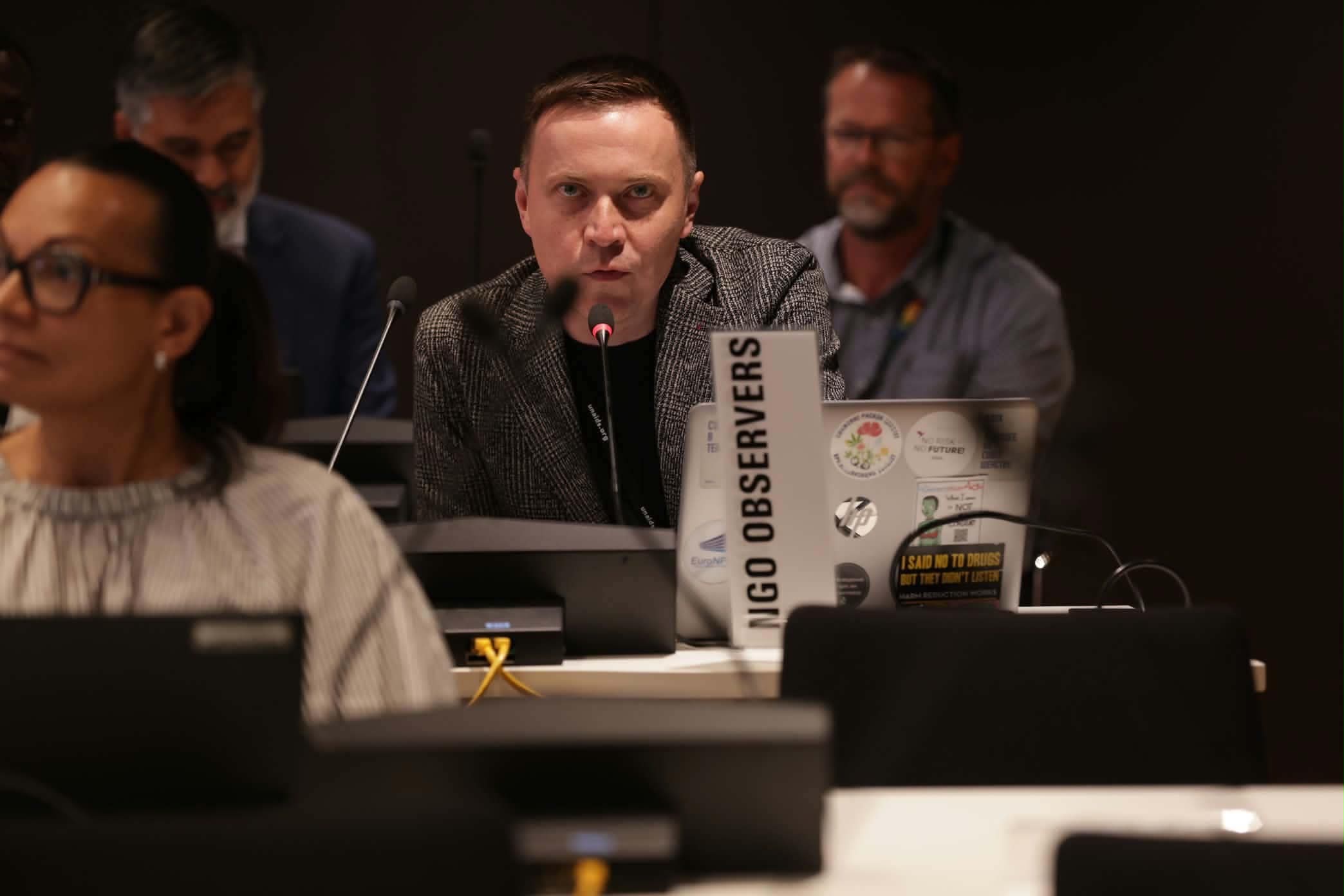
Alexei Lakhov served as NGO Europe delegate to the UNAIDS Programme Coordinating Board in 2022–2024 and former Executive Director of the European Network of People who Use Drugs (EuroNPUD). He is an independent consultant on harm reduction, HIV, hepatitis and drug policy in Eastern Europe and Central Asia.
It feels strange to talk about global solidarity when the world seems more divided than at any time since the Second World War. The global HIV response risks losing part of the breakthroughs, scientific and above all human, that once made it one of the greatest achievements in history. The Global Fund to Fight AIDS, Tuberculosis and Malaria is underfunded. The United Nations narrowly avoided a financial crisis, but it is still at a crossroads.
And it all looked so promising. Thirty years ago, in July 1996, the International AIDS Conference announced that combination therapy worked against HIV. Within a couple of years, AIDS deaths in high-income countries fell by 60–80%. Also in 1996, UNAIDS started its work. It was a Joint Programme unlike anything else in the UN, created to coordinate the global response to the epidemic, with the most affected communities at the table. And 25 years ago, in June 2001, the UN General Assembly held its first ever session on a single disease, HIV-infection. It ended with the Declaration of Commitment on HIV/AIDS, in which member states promised to sharply increase spending on the epidemic.
With all the progress since then, it seemed we were almost there: close to ending HIV as a public health threat by 2030 (well, it felt more like 2050 oftentimes, but still). It seemed that despite wars and other humanitarian crises, governments would find the missing billions, reach 95-95-95 and celebrate the end of AIDS, and that it would be one bright spot in human history, something that will let us forget the bad news for a moment and feel proud of what people can do.
A turning point did come. Just not that one.
In January 2025, the new US administration froze foreign aid and then shut down USAID. PEPFAR, the largest investment any country has ever made against one disease, went through freezes and cuts. Overall, international aid for health fell by about 40% compared with 2023. Testing, prevention and community services went first, the very services that reach people nobody else reaches.
Then came a blow from where we did not expect it. In September 2025, as part of the UN80 reform, Secretary-General António Guterres proposed to “sunset UNAIDS by the end of 2026“. Three months earlier, the UNAIDS Board had approved the Programme’s own two-step transformation plan, but the Secretary-General’s report simply ignored it. For many of us who had sat on that Board, it felt like a knife in the back. More than a thousand civil society organisations protested. After meetings with the Secretary-General and his deputy, “sunset” was replaced with “transition” and “transformation”. The plan to hand UNAIDS functions over to other UN agencies stayed and is being implemented now.
United to end AIDS. Or not?
At the AIDS2026 conference last July, UNAIDS presented a special report on what the cuts did. In 2025, international funding for HIV in low- and middle-income countries fell by 18%, or US$ 1.6 billion. It was the biggest drop in almost twenty years. Though many governments put in more of their own money, total funding still fell to US$ 17.6 billion, and the need by 2030 is US$ 21.9 billion a year.
A survey of 79 community-led organisations in 47 countries found that PrEP delivery halved. Services for gay men and other men who have sex with men fell by 85%, and services for sex workers by 82%. In countries where UNAIDS could track the money, community organisations got 99.4% of their funding from abroad, and when it stopped, nothing replaced it. People moved to public clinics, where stigma and abuse are more common, and many simply did not come back.
From Sunset to Transformation
After the “sunset” shock, the UNAIDS Board set up a Working Group to plan the transition. Its options paper goes to a consultation on 28–29 September, and the Board will decide in October.
The first conclusion is the most important one: the Working Group unanimously rejected the sunset, stating that the UN’s HIV mandate must continue. Instead of closing UNAIDS, it proposes to transform it into a much smaller Hub that would keep leadership, data and accountability, and different UN agencies would do most of the technical work. Country offices would gradually hand over to Joint UN Teams and, later, to national institutions, the Board will stay, and communities keep their seats on it.
There are good new ideas for communities: paid community positions inside the Hub, community representatives in Joint UN Teams, a shared say over a pooled fund for country work. There is also a rule I like: no function is handed over until someone has shown they can actually do it. The Working Group estimates the whole transformation would cost 0.5% or less of what was spent on HIV in low- and middle-income countries in 2025.
I welcome the report, however hard it was to even contemplate it. Many of the issues communities raised went into it, and, importantly, the ECOSOC mandate stays. Technical leadership can move to other UN agencies, sure. But the Hub has to stay strong enough to work from the global and regional level all the way down to countries. That is where UNAIDS has built trust, over three decades, with governments and with communities, and those relationships should not be lost in a reorganisation. Any further move of the Hub’s core functions should follow agreed markers of readiness, both of national systems and of the epidemic. Moving tasks from one UN agency to another will not save much. What really matters is whether countries, governments and communities together, can lead a response that includes everyone after 2030.
I spent three years on that Board as an NGO delegate for Europe, so I also see what else is still missing. Community say over the pooled fund has to be binding, and community organisations need to get money directly, not only through UN agencies. “Hand it over to national institutions” cannot mean the same thing in a country that jails people for using drugs or criminalizing same-sex relationships. And the UN agencies that will implement have no community seats in their own boards.
The Global Fund: still standing, with less
The Global Fund went through the same storm and did better than many expected. Its results report, published this month, shows that in 2025 the countries it supports had 26.9 million people on HIV treatment, up from 25.6 million the year before. They treated 7.4 million people for TB and distributed 196 million mosquito nets. The Fund started rolling out lenacapavir, the twice-yearly injection that prevents HIV. The Executive Director Peter Sands also said openly that HIV prevention was hit hard, and that some countries were hurt much more than others. He said the Fund continues to focus on key populations. At a time when the US has moved away from them, that matters a lot.
But the money is shrinking. At the replenishment this spring, donors pledged US$ 12.64 billion for the next three-year cycle. The target, let me remind you, was US$ 18 billion, and three years ago it was US$ 15.7 billion. The so-called Team Europe gave just over €3 billion, down from €4.3 billion. Germany pledged €1 billion, down from €1.3 billion. The European Commission cut its pledge only slightly, but it still cut. And the German draft budget for 2027 plans further cuts to global health.
With less money, the Fund is moving its focus to the poorest countries with the heaviest burden and speeding up transition elsewhere. I understand the logic, but I also know what it means in my region. Most countries in Eastern Europe and Central Asia are middle-income. When the Global Fund leaves, harm reduction and community services start depending on governments more and more. However, many of those governments see people who use drugs as criminals and HIV NGOs as foreign agents, and the poison of this undesirability is spreading across EECA.
The Global Fund and UNAIDS need each other, because the Fund pays for services and UNAIDS counts who is being reached and who is not, and says so out loud when governments would rather not hear it. If one of them weakens, the other’s work gets diminished or does not focus on the human rights aspect of the global HIV response so explicitly.
Remember 1995
Right now we have another Ebola outbreak, and the same story in miniature: there are the tools to contain the virus, but the system that brings them to people is melting. Countries still cannot agree on a pandemic agreement, on an annex that would establish the Pathogen Access and Benefit-Sharing (PABS) system, five years after COVID showed what happens without one. And global solidarity seems like a long time ago in a galaxy far, far away.
So maybe it is time to remember how humanity came together against AIDS in 1995.
The world then was not kinder than today. There was no treatment, people with HIV were feared and hidden, many governments pretended the epidemic was someone else’s problem. And still, six UN agencies agreed to work as one programme, and ECOSOC gave it a board where people living with HIV sat at the same table as governments. Nobody had done that before in the UN. A year later, combination therapy arrived. A few years after that, activists, generic manufacturers and a handful of governments brought the price of treatment from over US$ 10,000 a year to about US$ 140. Then came the Global Fund and PEPFAR.
It happened not because the world was united but because enough people decided that others dying of a treatable disease was not acceptable, and then paid for it, year after year.
The Board of UNAIDS decides in October what the Joint Programme will look like. Donors are deciding now how much to cut. The people who were at that table in 1995 did not know how it would end either, but they did it anyway, and some of them did not live to see it work. The least we can do is not undo it.