
Gracia Violeta Ross: “If we decide to save lives, we can do it”
The Nation Barbados
This blog is part of TOGETHER WE SAVE LIVES – THE GLOBAL FUND: FROM FINANCIAL CONTRIBUTIONS TO IMPACT, a joint campaign by the Global Fund Advocates Network (GFAN), Alliance for Public Health (APH) and Action against AIDS Germany.
Gracia Violeta Ross, World Council of Churches with Johanna Fipp and Peter Wiessner, Action against AIDS Germany, on solidarity, political promises and why saving lives requires more than words
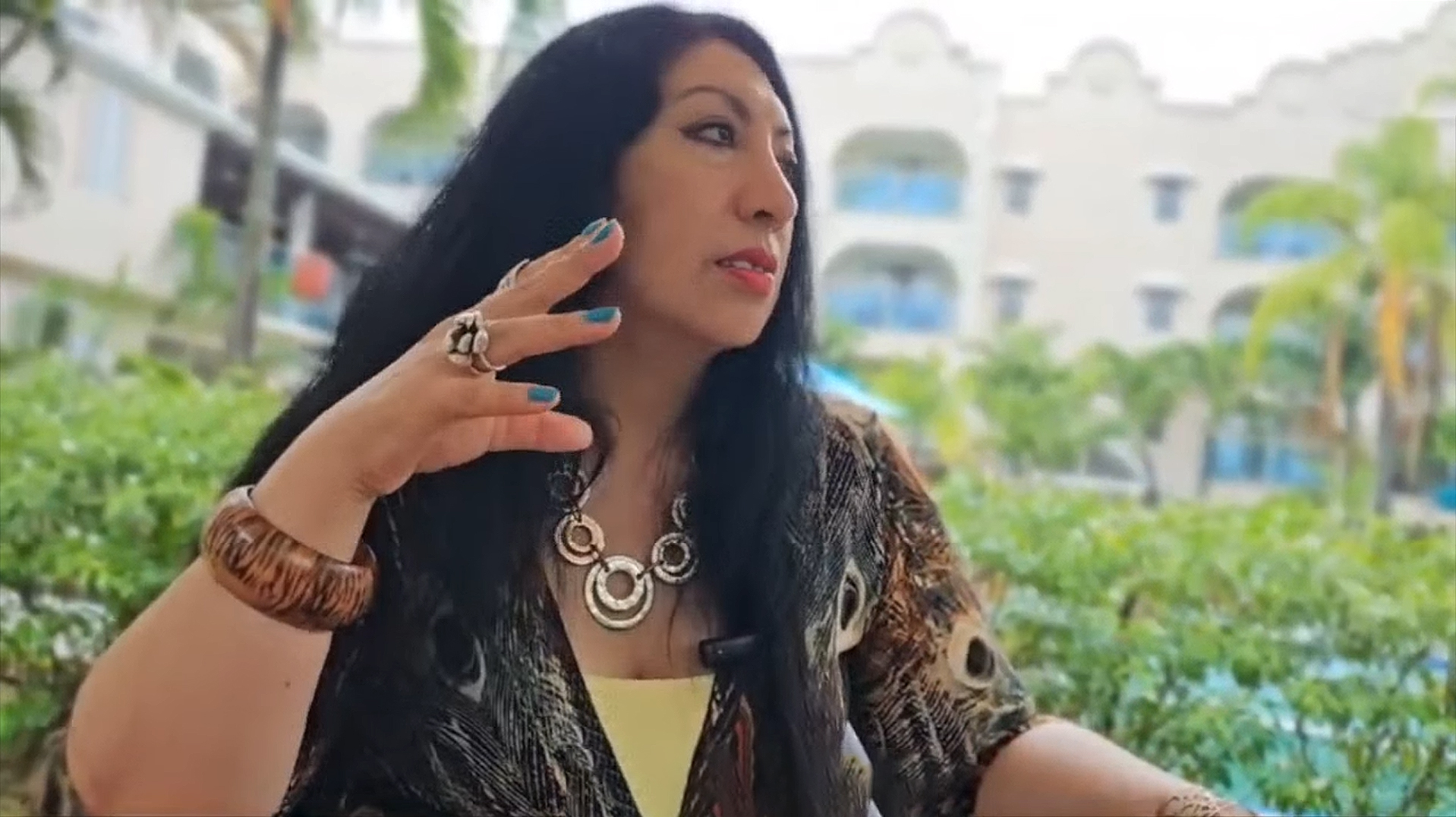
At the AIDS 2026 conference in Rio de Janeiro, Gracia Violeta Ross joined the launch of Together We Save Lives. A long-time HIV advocate from Bolivia, openly living with HIV, she now leads the HIV, Reproductive Health and Pandemics Programme at the World Council of Churches in Geneva. In this interview, she talks about what global solidarity really means, why predictable funding can be a matter of life and death, and why governments and faith leaders must turn their promises into action. Questions were raised by Johanna Fipp and Peter Wiessner, Action against AIDS Germany
Question: Gracia Violeta, you were with us in Rio when we launched Together We Save Lives. What has stayed with you most?
Gracia Violeta: What has stayed with me is the conviction that when we decide that we are going to work on saving lives, then we can really do it.
Global health challenges are often presented as if they were impossible to overcome – as never-ending problems that are simply too big to solve. But when you come together in a place like the AIDS Conference, you see something different.
You see communities, policymakers, governments, donors and organisations each taking their own small steps. And when all these actions come together, we actually make progress.
This is very important because we can now say that AIDS can be ended. We can end HIV and AIDS as a public health threat.
For me, that is what remains most strongly from Rio: it is possible. But we have to decide that we are going to do it.
Question: You have described global solidarity as “loving your neighbour as yourself”. What does that mean in practice?
Gracia Violeta: I am an anthropologist and an advocate, but I am also a person of faith. For me, global solidarity is rooted in this biblical principle: love your neighbour as yourself.
Think about how we treat ourselves, our children or our families. We don’t usually give them the least that is available. We try to provide the best healthcare we can afford, nutritious food and what they need to live with dignity.
We should apply the same standard to our neighbours – wherever they live.
Sometimes governments think: Why should we spend money on people who are not our own people? But global solidarity is not simply about helping someone far away. It is also an investment in our own future.
The diseases we are fighting do not recognise borders. HIV, tuberculosis, Ebola and other infectious diseases don’t have passports. We live in a shared global home, and people will continue to move across borders.
So my neighbour is not really that far away. My neighbour is the person next to me – even if that person is different from me.
And genuine solidarity cannot just be words. Governments can announce programmes, strategies and declarations. But if these commitments are not translated into action, they have no meaning.
The Bible puts this very clearly. In the Book of James, we are reminded that if we see someone who is hungry or without clothing and simply tell them, “Stay well, keep warm and eat,” without doing anything to meet their needs, then our words are empty.
Faith without action is not real faith.
Question: What does reliable funding mean for people living with HIV and for communities?
Gracia Violeta: Reliable funding means something very basic: the freedom from constantly worrying about tomorrow.
When I was living in Bolivia, I knew this anxiety very well. What if there were no viral-load testing kits? What if the medication wasn’t available? What if there was a stock-out?
When I came to Geneva, I started paying for my medication myself. And one of the biggest differences was that the medication was simply there. You don’t constantly have to wonder whether it will be available.
That peace of mind is enormous. You can live your life. You can work. You can make plans. You can think about your future instead of thinking: Will my medication be there tomorrow?
Many people living with HIV still live with this anxiety.
But funding is about more than medicines and tests. International solidarity also supports the community networks that sustain people living with HIV.
Many countries may be able to finance some basic services. But community organisations and networks reach people who might otherwise be left behind. They provide support, build trust and help people navigate systems that can be hostile or discriminatory.
When this funding disappears, we don’t just lose a programme. We lose a community network. We lose support. For some people, we lose a lifeline.
This is particularly serious for people who already face discrimination because of who they are or whom they love, in addition to living with HIV.
Question: And what happens when funding is reduced, delayed or never arrives?
Gracia Violeta: The consequences are very real.
If medicines are unavailable, treatment can be interrupted. If testing systems are disrupted, people lose access to essential information about their health. If community organisations disappear, people lose the networks that support them.
And when these support structures disappear, stigma and discrimination can quickly return.
That is why political promises matter. It is not enough to say, “Yes, we will do it.” Organisations and communities make plans based on these commitments. People rely on them.
I find it terrible when governments make promises, plans are developed on the basis of those promises, and then the money never becomes a reality.
There is a very simple principle here: if you promise something, you should do it.
A financial commitment is important, but the real test is whether the resources actually reach the people who need them.
Question: Some governments argue that they have to focus on problems at home. Why should global health remain a priority?
Gracia Violeta: We need to stop thinking of “home” as a place defined by borders.
The world is interconnected. Infectious diseases do not stop at national borders, and neither do people. What happens in one place can affect another.
Global solidarity should therefore not be presented as charity. The right to health is recognised in international agreements, including the Universal Declaration of Human Rights, and in the constitutions of many countries. It is an obligation, not a favour.
We also need to understand that investing in global health is an investment in our own societies. When we protect people’s health, we protect the people who sustain families, communities and economies.
So when governments say they have to choose between their own people and global health, I would challenge that assumption.
Protecting our global community is ultimately part of protecting people at home.
Question: You also emphasise the responsibility of governments. How can civil society hold them accountable?
Gracia Violeta: We need stronger and better coordinated advocacy.
Politicians are given authority by the people who elect them. They cannot simply make promises and then walk away from them.
When governments make commitments, we need to document them – in official statements, in the media and in public records – and then follow up.
We have to be able to come back and ask: You said you would do this. Did you do it?
This is also where faith leaders can play an important role.
In the Bible, there are many stories of prophets challenging kings because they were failing to protect the vulnerable. The vulnerable people of today include people living with HIV, young people, gay men, sex workers, children and people affected by tuberculosis and malaria.
These communities need people with moral and political authority to stand beside them.
Question: What can faith communities do to turn solidarity into action?
Gracia Violeta: For me, the story of the Good Samaritan provides a very powerful example.
A man is wounded and lying on the road. Several people see him but simply pass by. Then someone who was not expected to stop does stop. The Samaritan takes care of him, brings him somewhere safe, pays for his care and comes back to see how he is doing.
That is what solidarity looks like.
When we see people affected by HIV, tuberculosis or malaria, we should stop. We should not simply offer words or prayers. We should do something.
Religious leaders can walk alongside people living with HIV and affected communities. They can accompany them when they meet governments. They can sign letters, mobilise resources and support people who need food, medical care or other forms of assistance.
They can also use their moral authority to challenge stigma and discrimination.
In the Gospels, healing is not an abstract idea. It is something concrete. Faith communities should therefore move beyond words and make their solidarity visible in people’s lives.
“Don’t just pray for people. Walk with them.”
Question: You have seen the Global Fund at country level. What makes this partnership so important?
Gracia Violeta: I know the Global Fund from the country level because I was involved in establishing the Country Coordinating Mechanism in Bolivia.
Before the Global Fund, it was extremely difficult for us as communities to meet with the Ministry of Health. The door was essentially closed.
The Country Coordinating Mechanism created something new: a table where government, NGOs, communities and vulnerable communities could sit together and discuss what was needed and what the funding should support.
And importantly, the proposals did not simply come from the Global Fund. We developed the proposals ourselves.
That is very important.
Some international partnerships can operate in a very colonial way: they provide the money and then tell you what to do. The Global Fund model, at its best, is different. It gives communities a seat at the table and empowers them to shape the response.
We should protect that.
Community participation is not an optional extra. It is part of what makes the response work.
Question: Finally, if you could speak directly to governments that have promised money to the Global Fund, what would you want them to hear?
Gracia Violeta: First, I would say thank you for the commitments that have been made. A promise is an important beginning.
But it cannot be the end.
We don’t need goodwill on paper. We need resources on the ground saving human lives.
The difference between a promise and action is enormous for someone waiting for medication, for a community trying to keep its support network alive, or for a person facing stigma and discrimination.
The Global Fund is an important partnership because it has shown what can happen when governments, communities and civil society work together.
So my message is simple: if you say you are committed to saving lives, then act on that commitment.
And I would say the same to religious leaders, civil society and all of us.
When you see someone who needs help, don’t just pass by.
Stop.
Look.
And do something.
Because when we decide to save lives, we can do it.
______
Interview with Gracia Violeta Ross,
Questions: Johanna Fipp, Peter Wiessner, Action against AIDS Germany
Recorded Sept 9 2026